

Galapagos Species Database
The Galapagos Species Database shares the information about the species from our Natural History Collections.
Rubus adenotrichos
mora silvestre, zarzamora
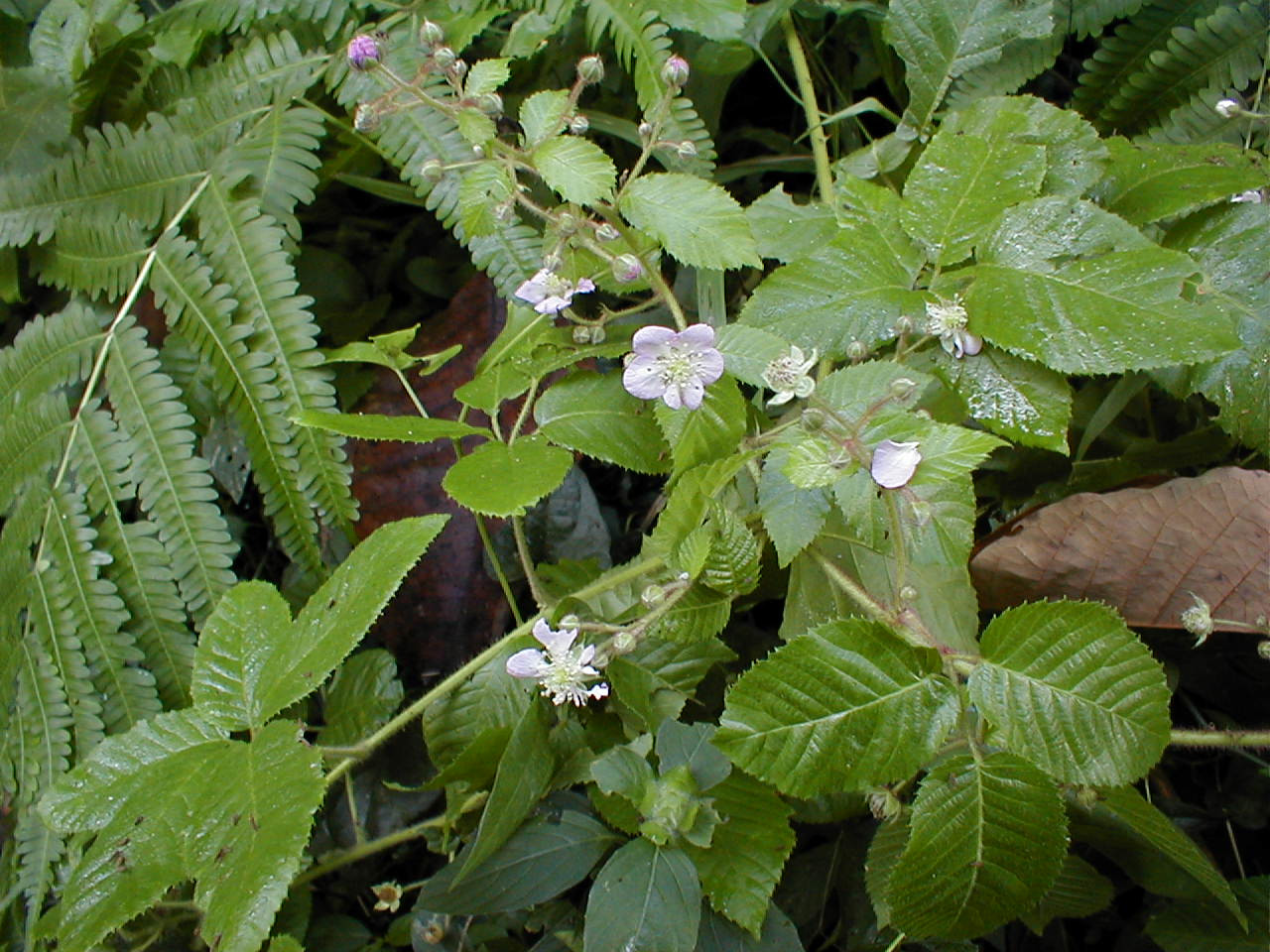
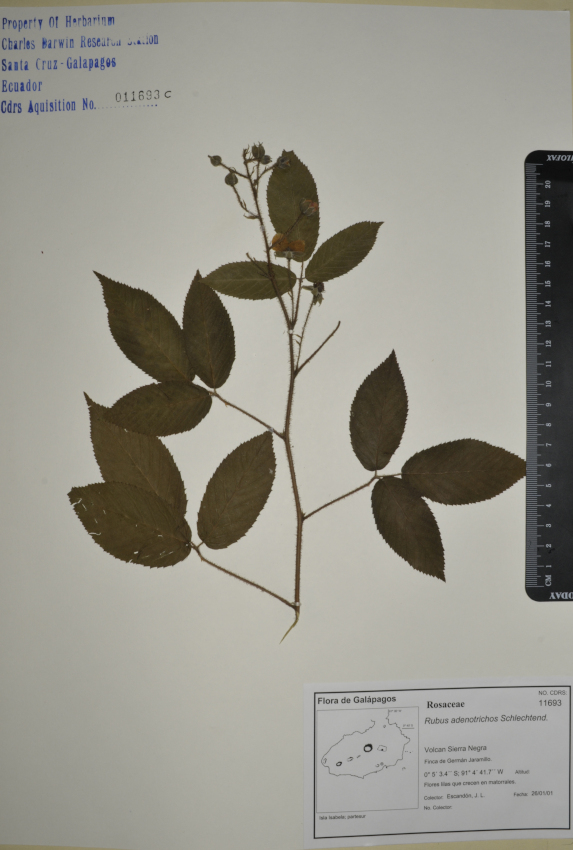
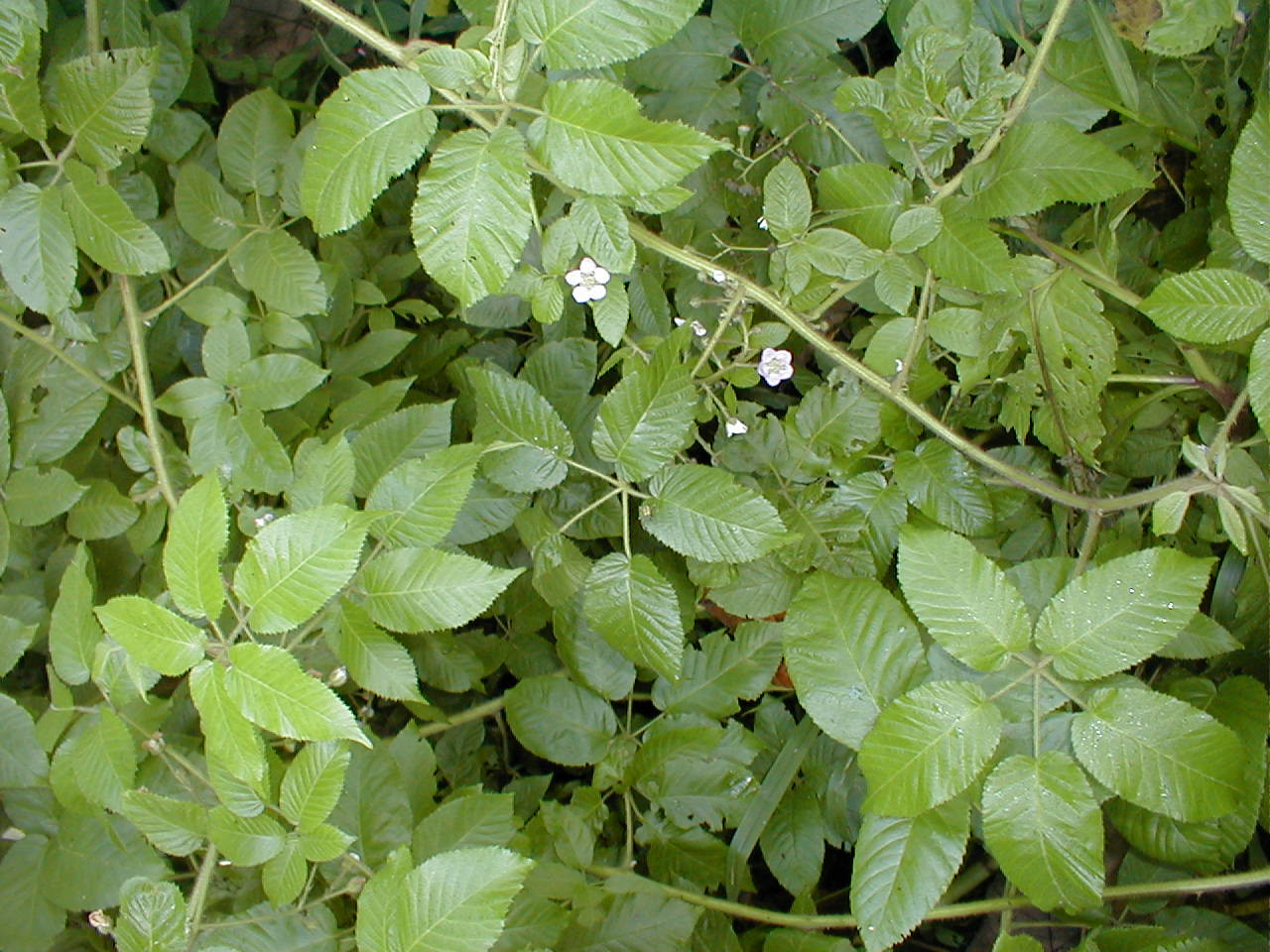
A climbing shrub that is characterized by glandular stems and white flowers grouped in a pyramid. The leaves are composed of 3 to 5 leaflets.
A climbing shrub that is characterized by glandular stems and white flowers grouped in a pyramid. The leaves are composed of 3 to 5 leaflets. It is native to Ecuador where it grows in areas from 1200 to 3600 m in elevation.
Domain
Eukaryota
Kingdom
Plantae
Phylum
Magnoliophyta
Class
Magnoliopsida (= Dicotyledoneae)
Order
Rosales
Family
Rosaceae
Genus
Rubus
Species
adenotrichos
Taxon category: Accepted
Syn.: Rubus roseorum A. Berger
Origin: Introduced - established
Year of first record: 1988
Mode of introduction: Intentional
Introduction Pathway: Intentional
Subpathway: Agriculture/Horticulture
Introduced status: Naturalized
Invasive status: No data
Impact in Galapagos: The species has not been registered as an invasive species anywhere. However, since it is in the Rubus genus which contains many invasive species, and following the precautionary principle, this species should be a priority for eradication in Galapagos, although it has not produced fruit yet.
Impact elsewhere: The species has not been registered as an invasive species anywhere.
Control History in Galapagos: The use of herbicide (picloram) kills the plants. The species has been eradicated in Santa Cruz.
Preference for an altitude zone in Galapagos: Humid zone
Habitat preferences: Native to Ecuador where it grows in areas from 1200 to 3600 m in elevation.
Trophic role: Primary producer
Growth form: Shrubs
Distribution origin: North and South America
Map of specimen collection localities or observation records for this species in our collections database.
Distribution: Established in two small patches in the agricultural zone of Isabela (total of 1.1 ha), two small patches in the agricultural zone on Santa Cruz, originally from North and South America.
- Romoleroux, K. (1996) Rosaceae. Flora del Ecuador 56: 1–151.
- Tropicos.org. (2017) Database of Missouri Botanical Garden. Tropicos.org. Missouri Botanical Garden. 06 Oct 2017 <http://www.tropicos.org
- Tye, A. M. C. Soria and M. R. Gardener (2002) A strategy for Galapagos weeds. In Veitch, C. R. and Clout, M. N. (eds.) Turning the tide: the eradication of native species. IUCN SSC Invasive Species Specialist Group. IUCN, Gland, Switzerland and Cambridge, UK. IUCN SSC Invasive Species Specialist Group. IUCN, Gland, Switzerland and Cambridge, UK.
You are welcome to download and use the information found in this page, acknowledging its source.
This page should be cited as follows:
"Galapagos Species Database, Rubus adenotrichos", dataZone. Charles Darwin Foundation, https://datazone.darwinfoundation.org/en/checklist/?species=1042. Accessed 16 May 2026.
Dispersal propagule: Fruit
Seeds are dispersed via ingestion by animals, especially birds.