

Galapagos Species Database
The Galapagos Species Database shares the information about the species from our Natural History Collections.
Ipomoea triloba
flor de la mañana, flor de mañana, campanilla, quilamul, three lobed Morning Glory, morning glory, littlebell
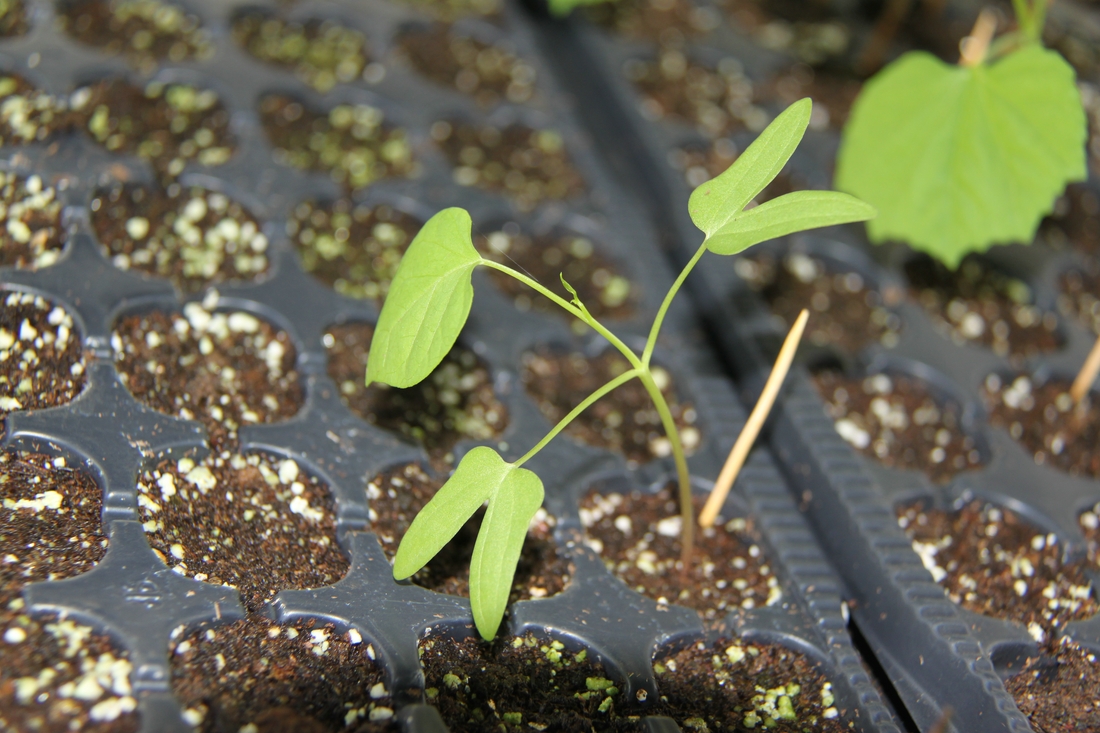
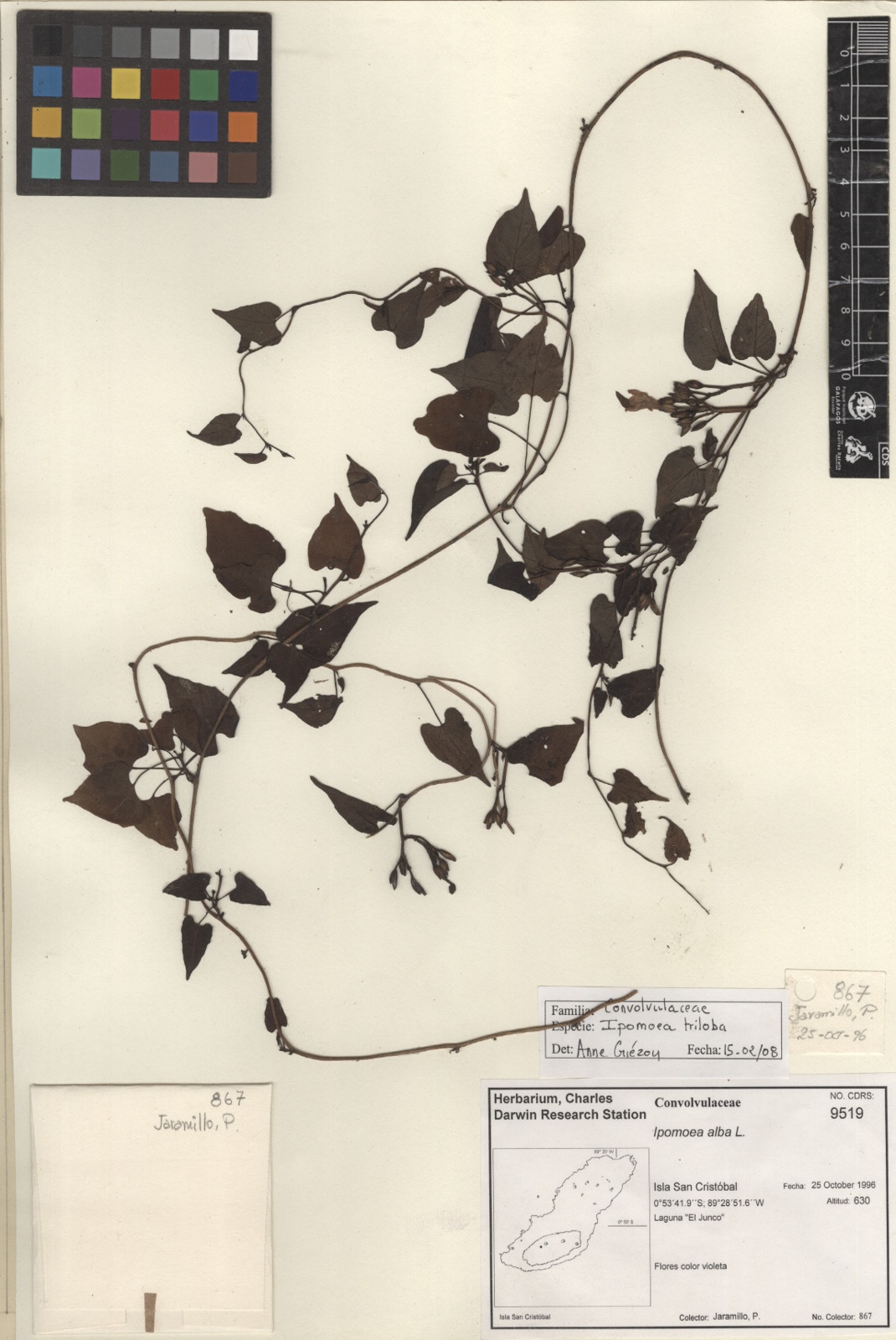
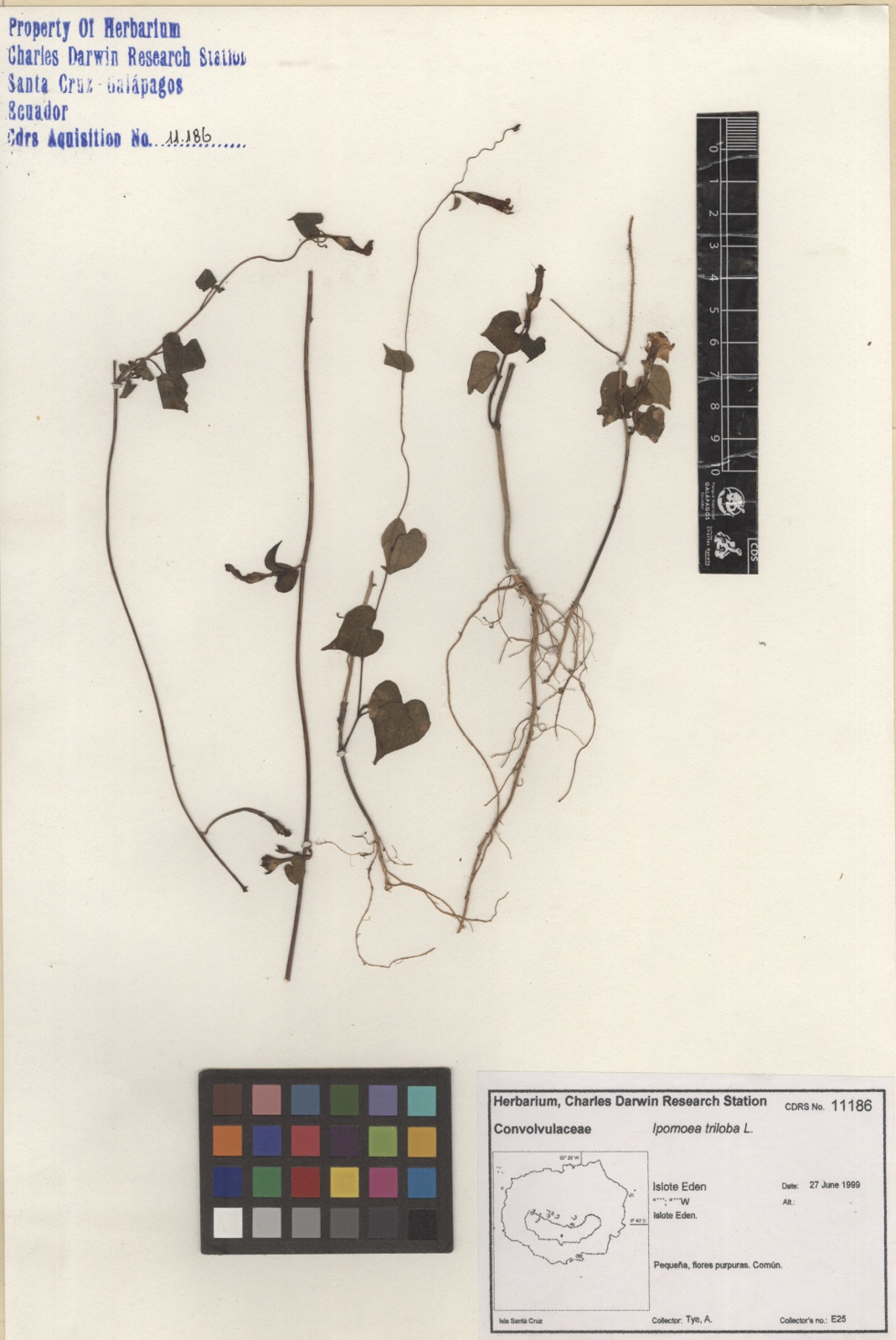
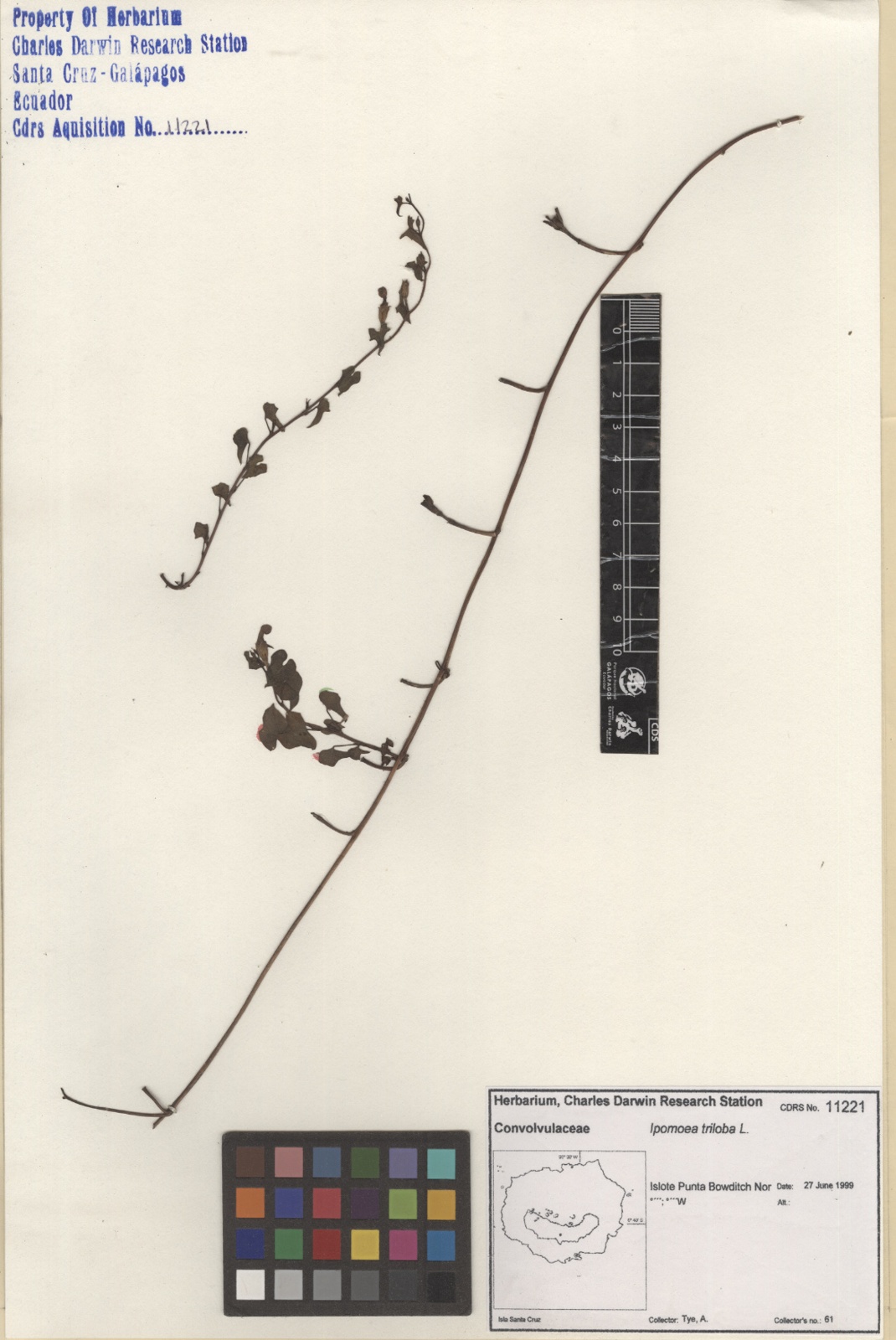
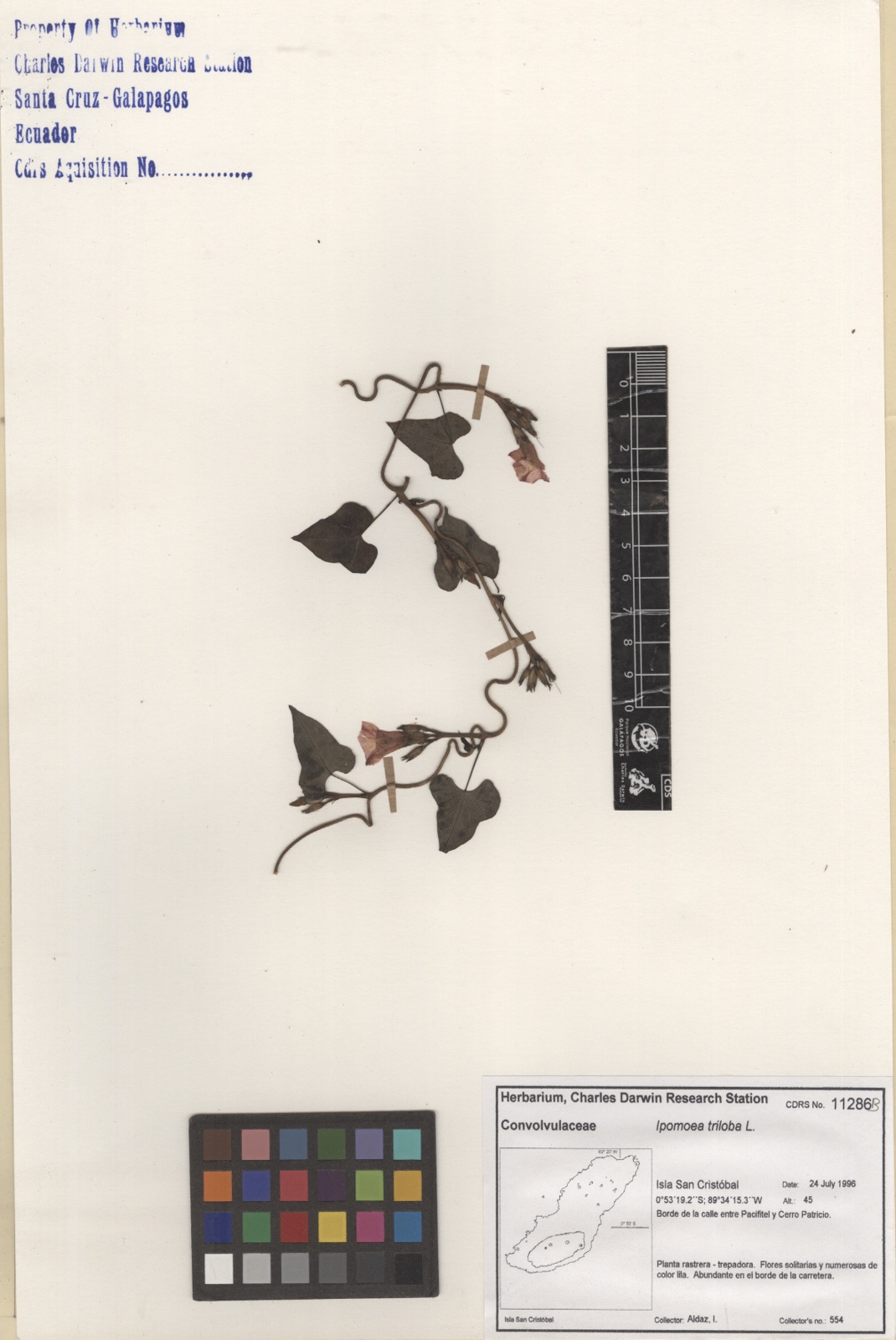
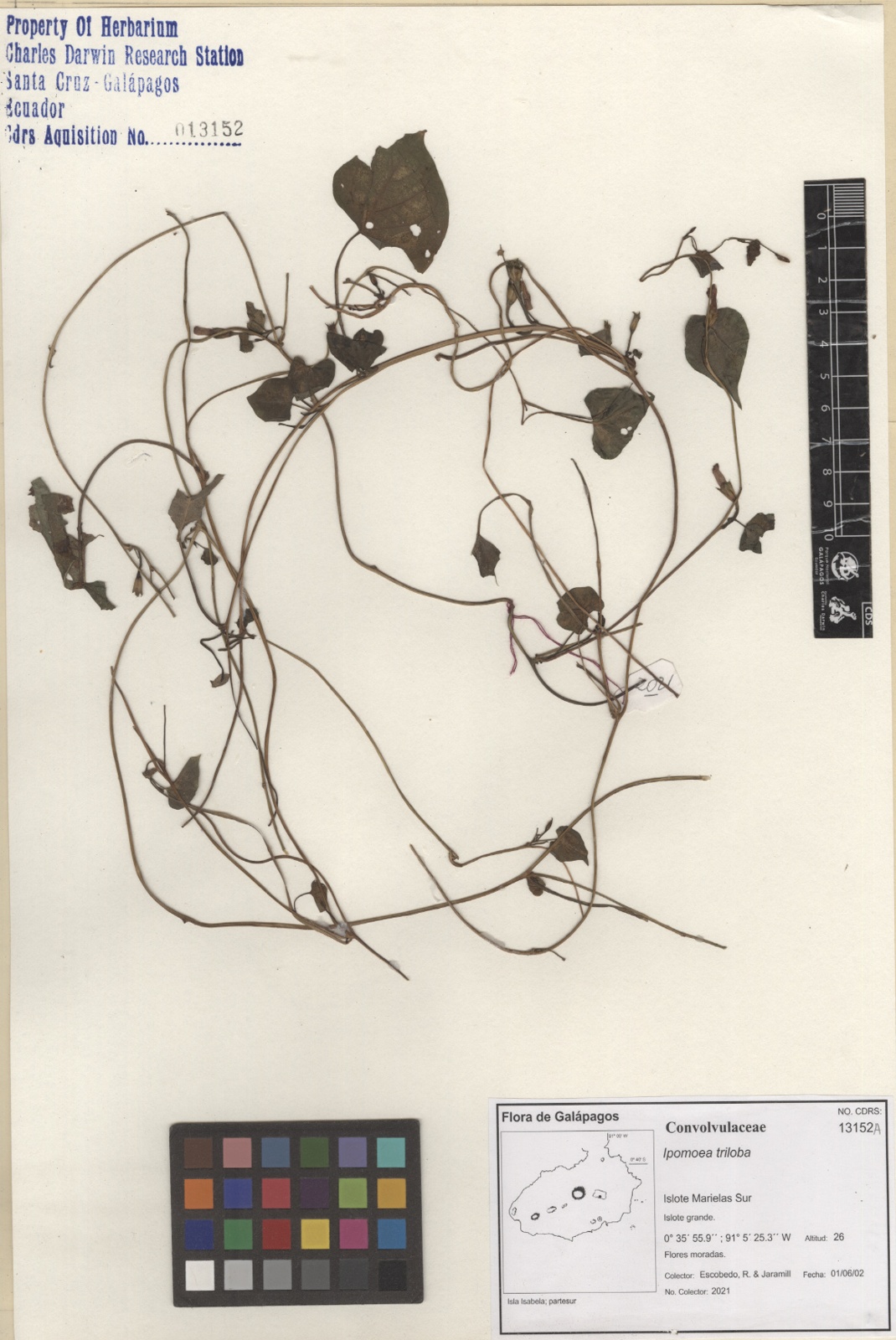
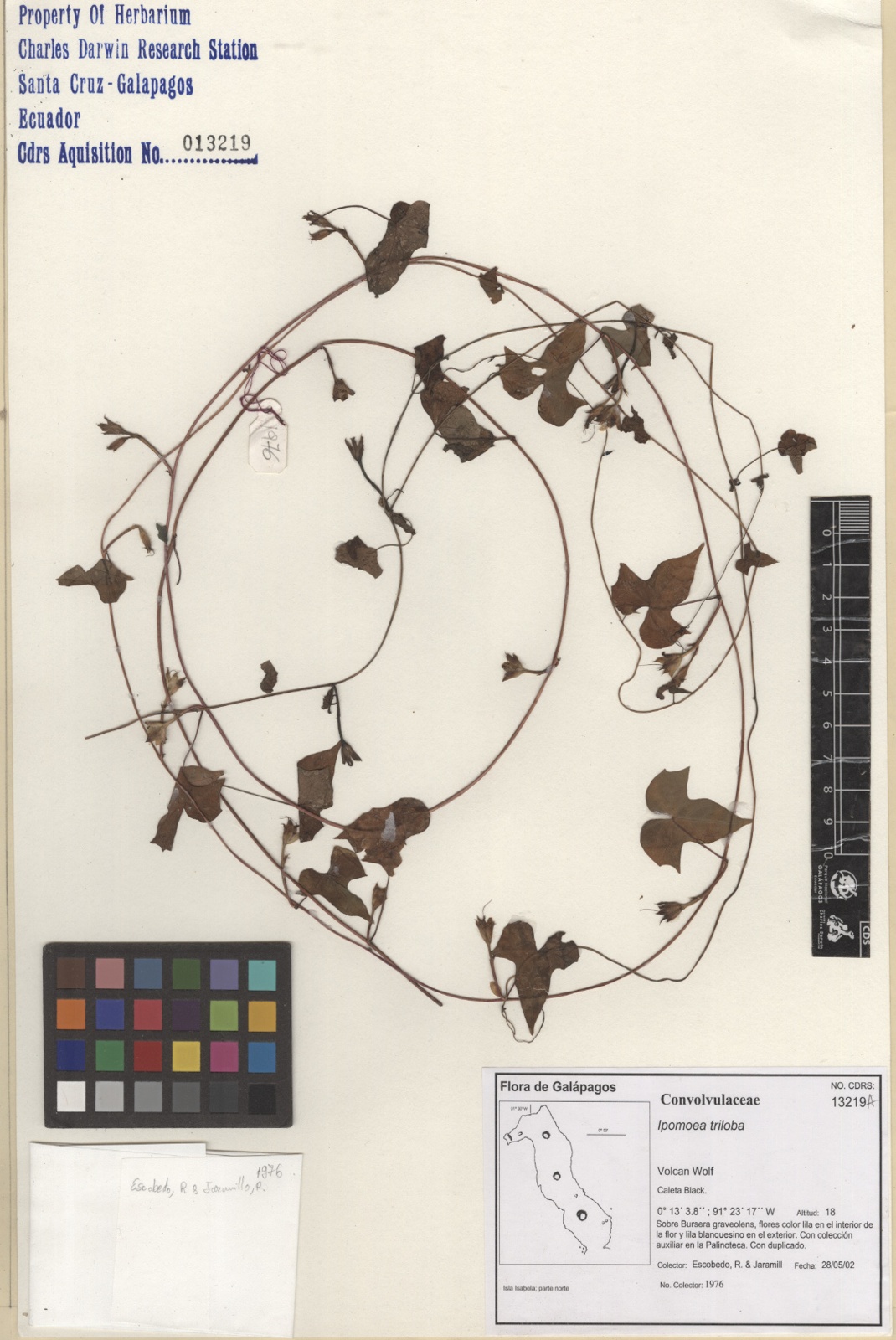
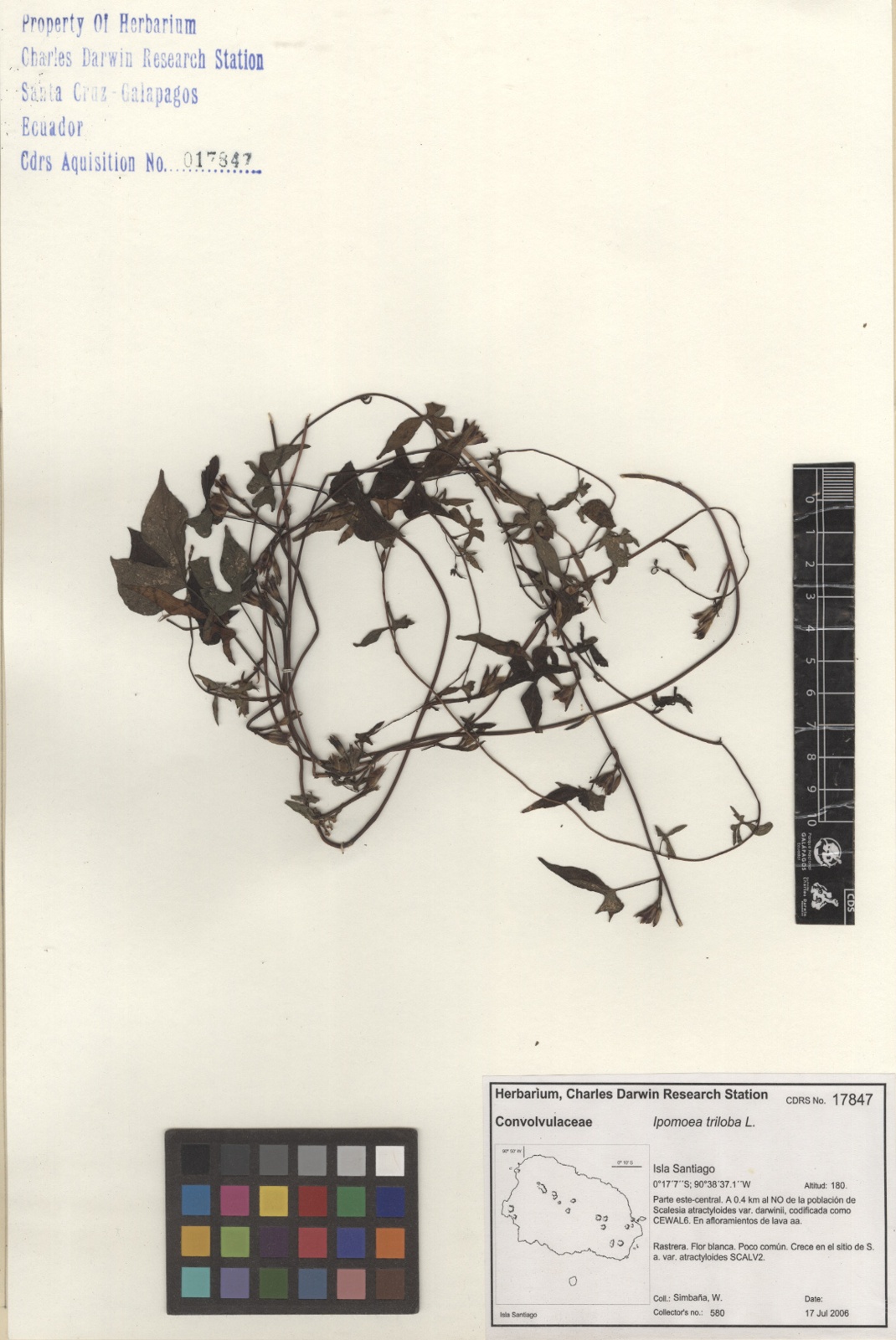
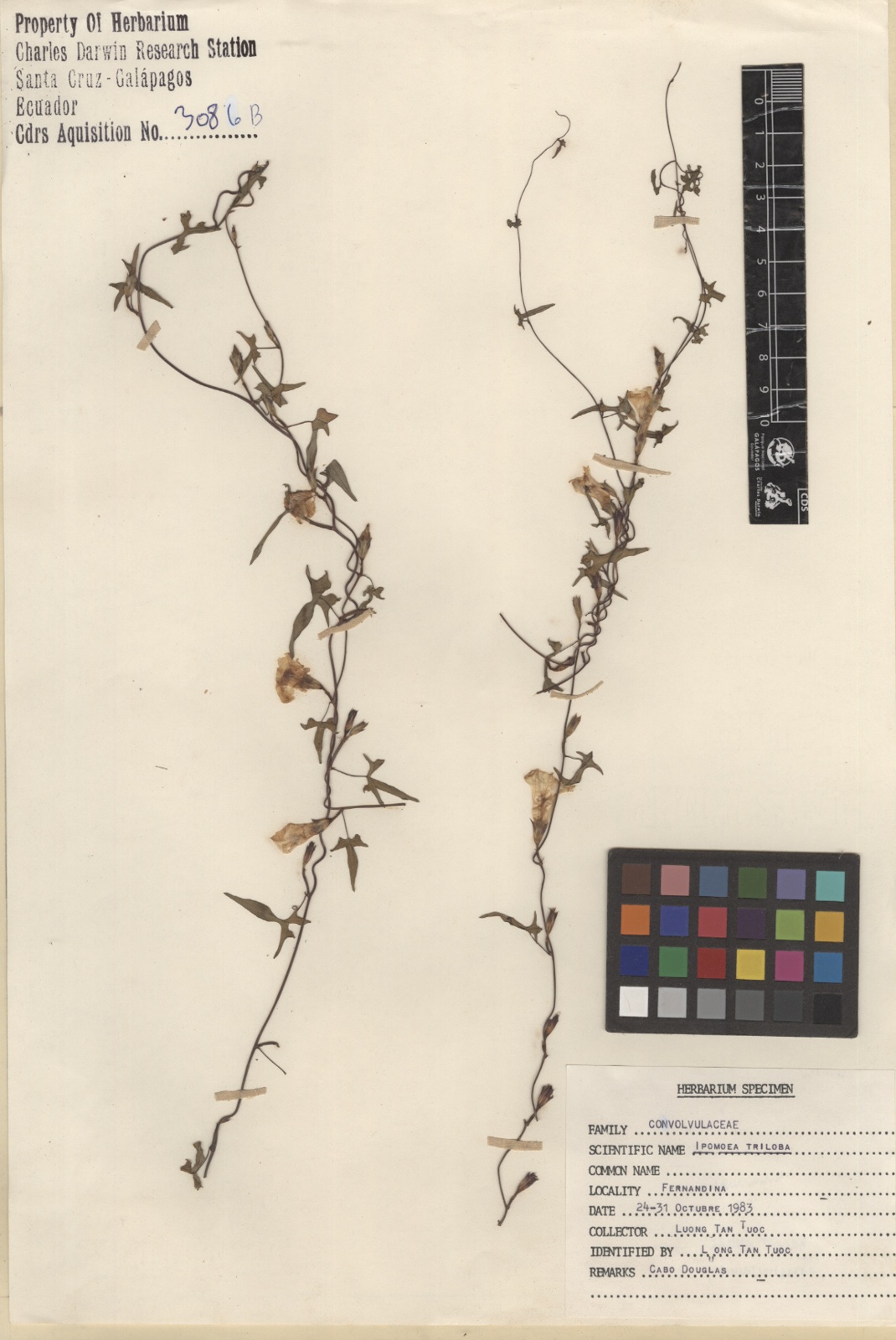
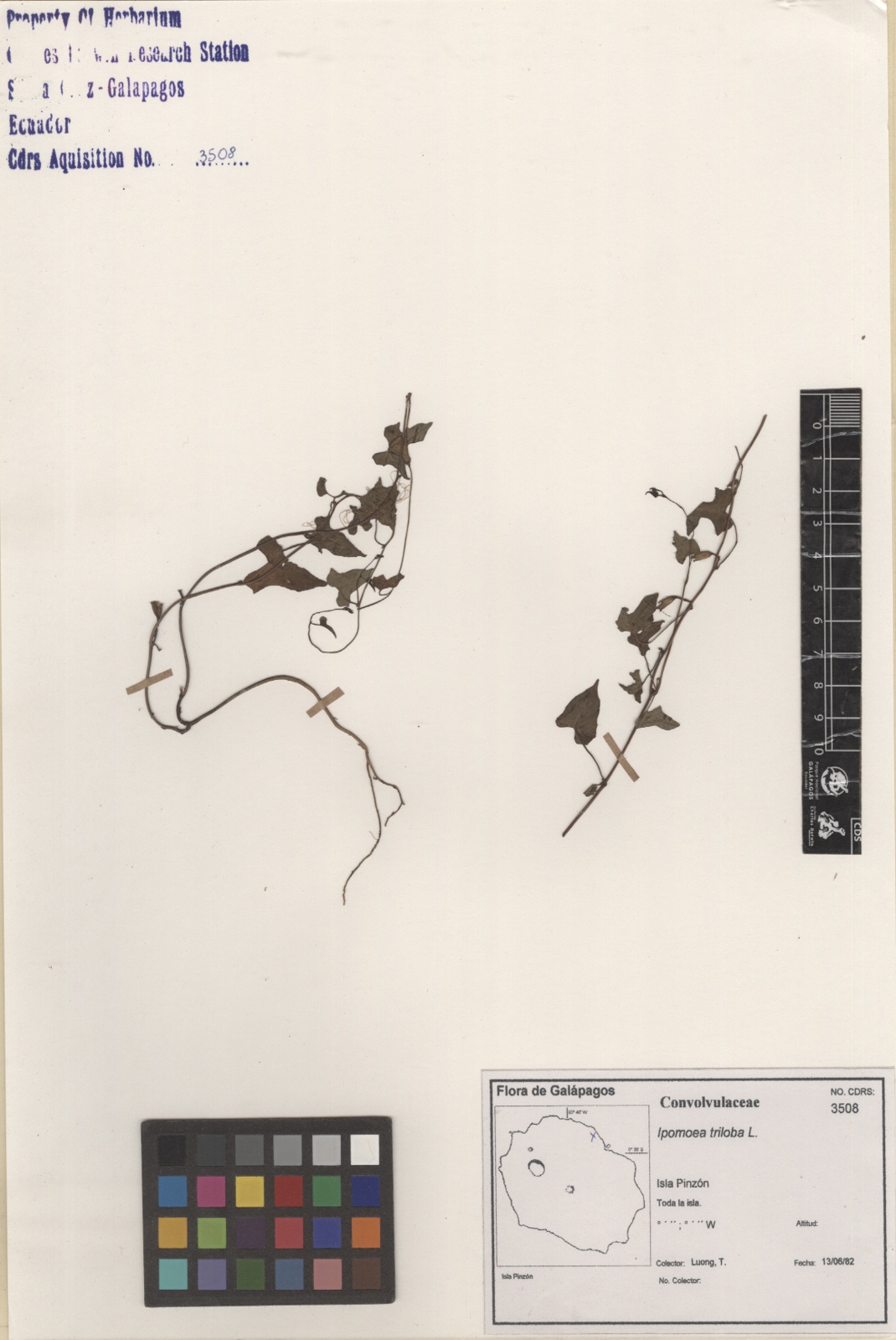
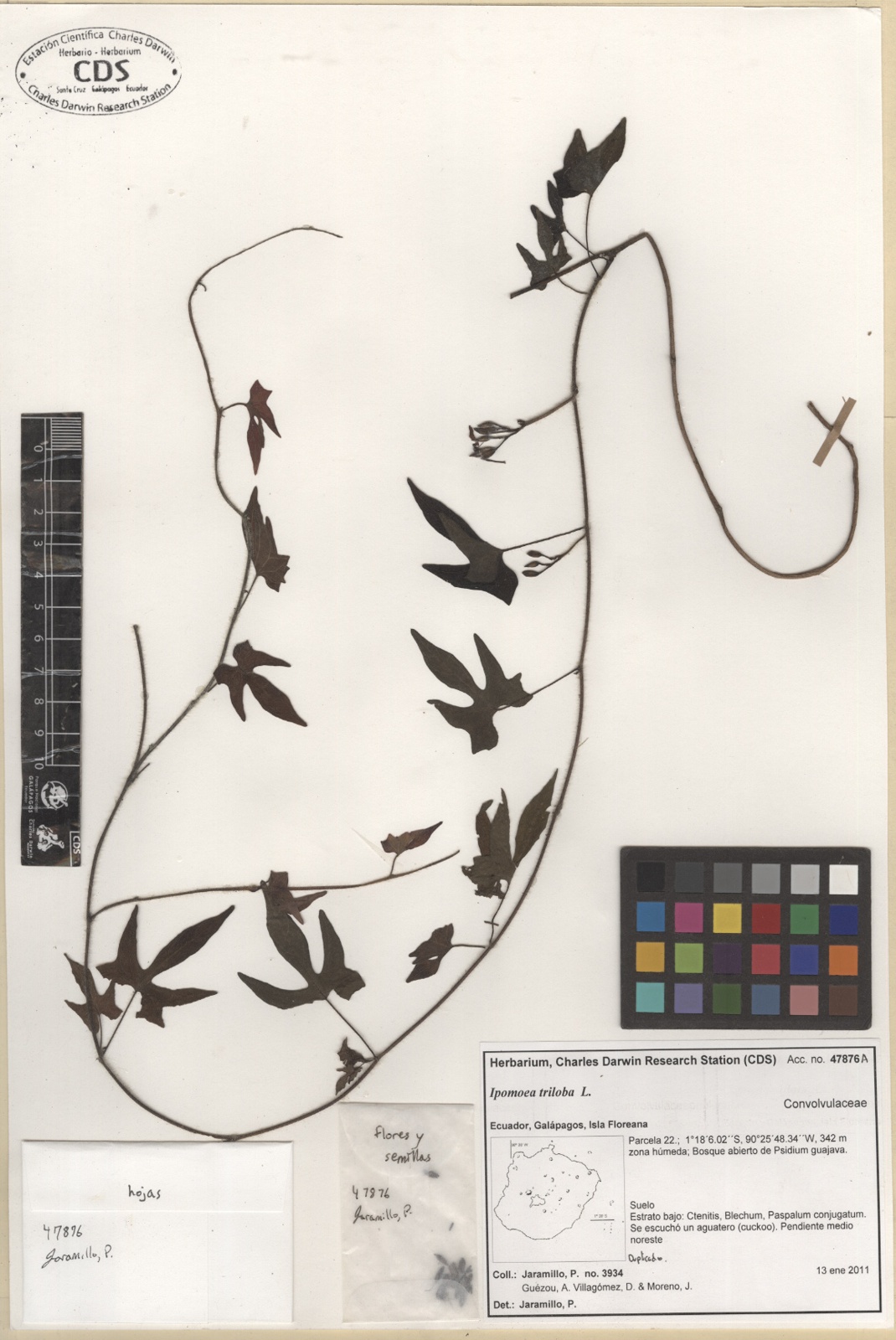
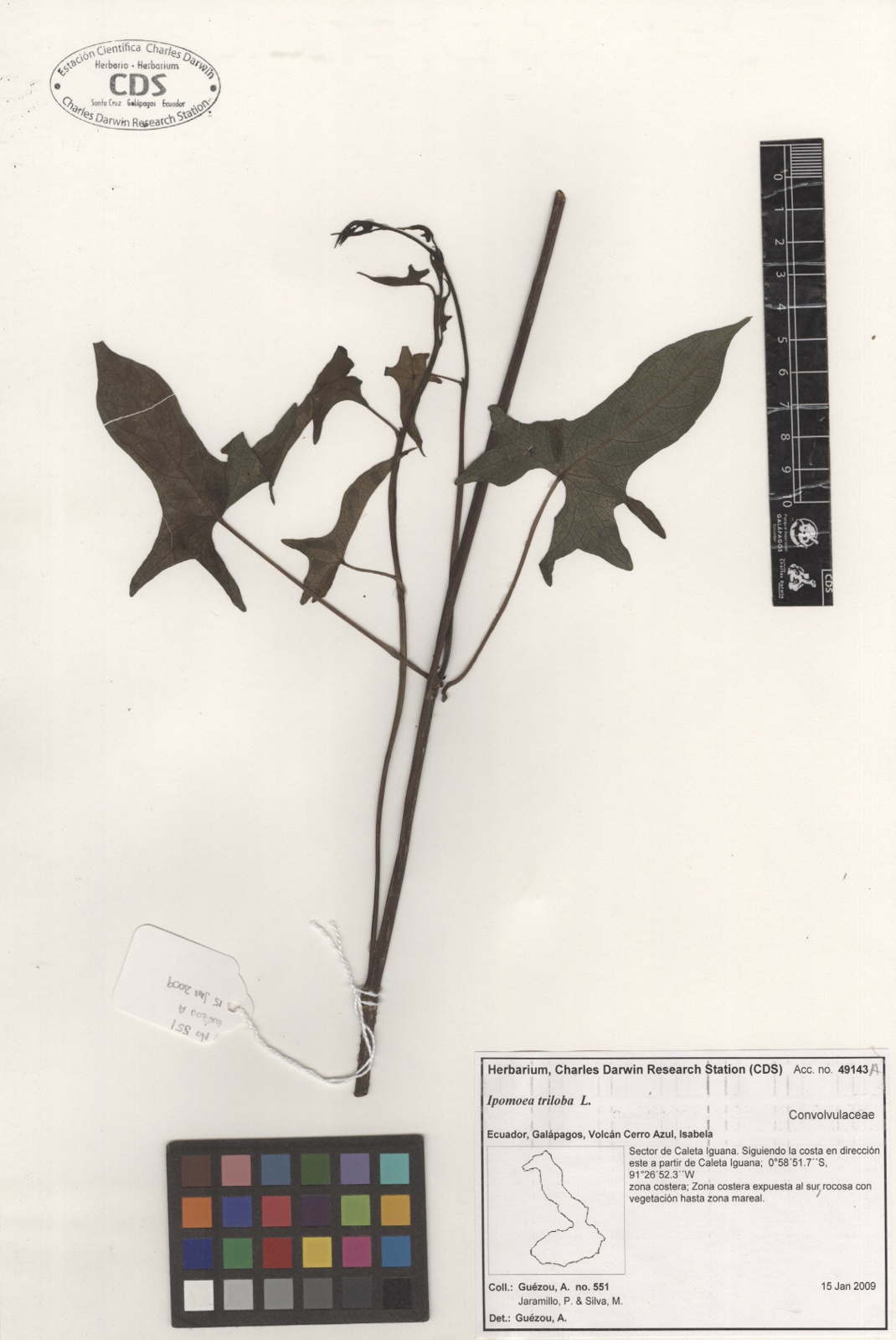
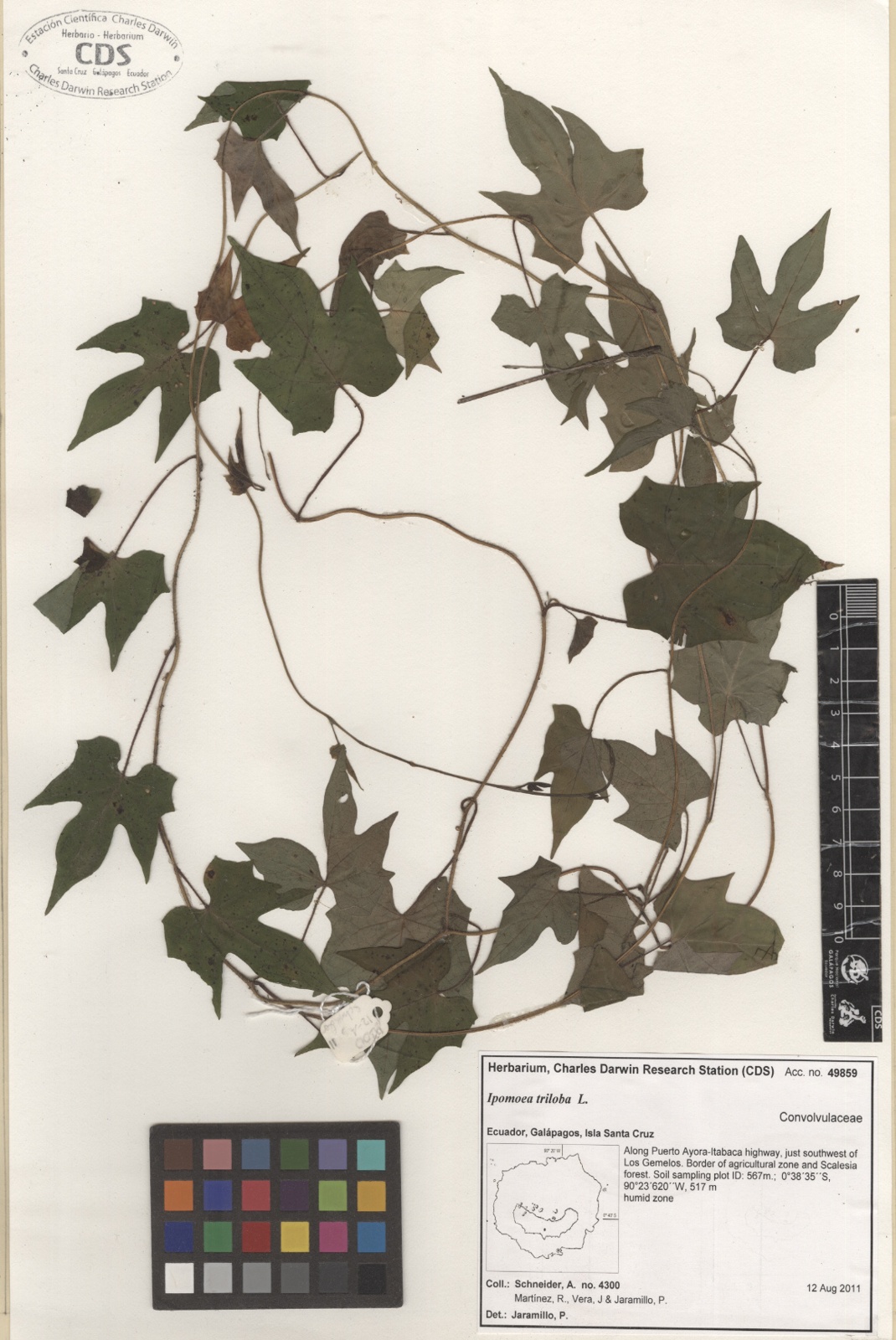
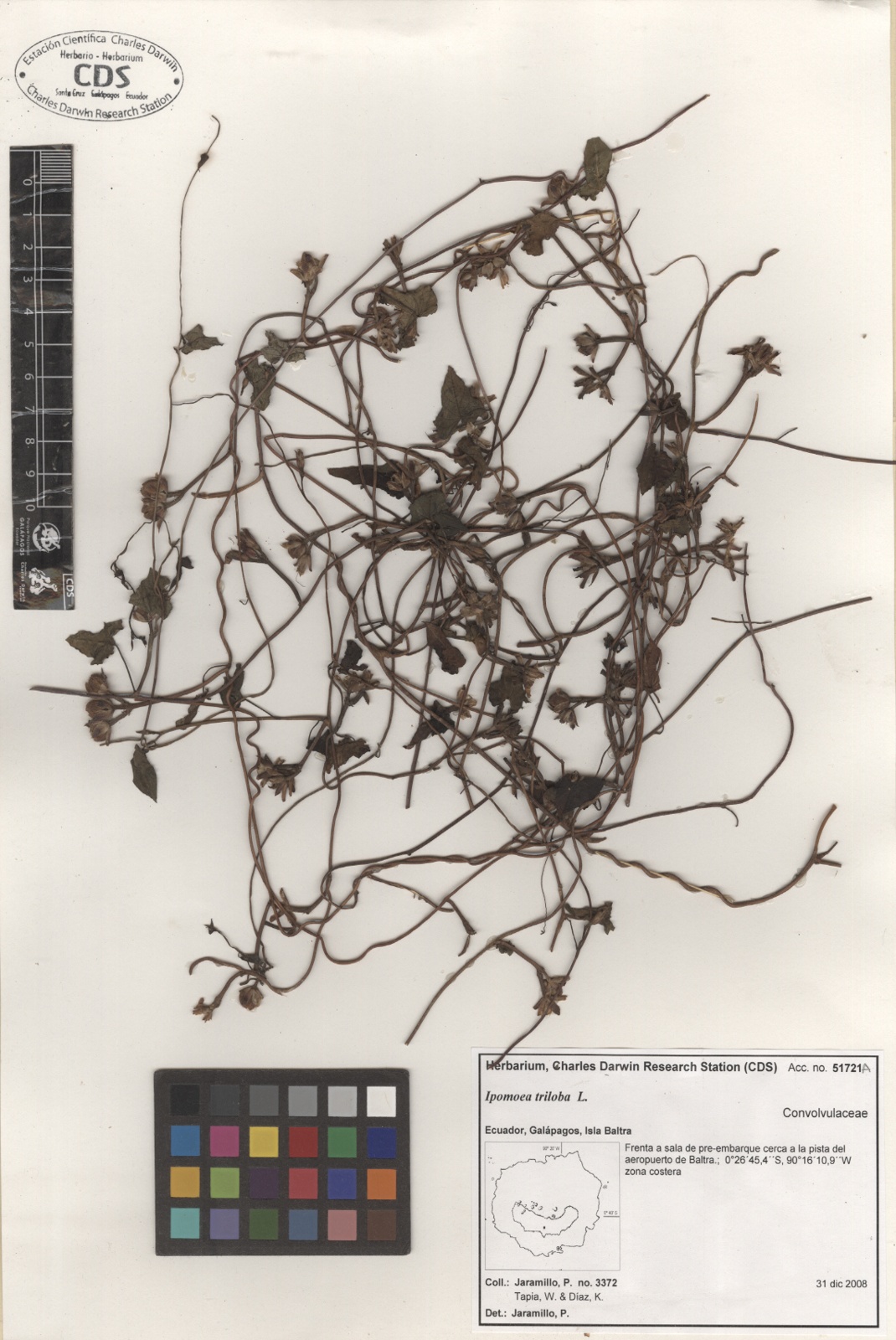
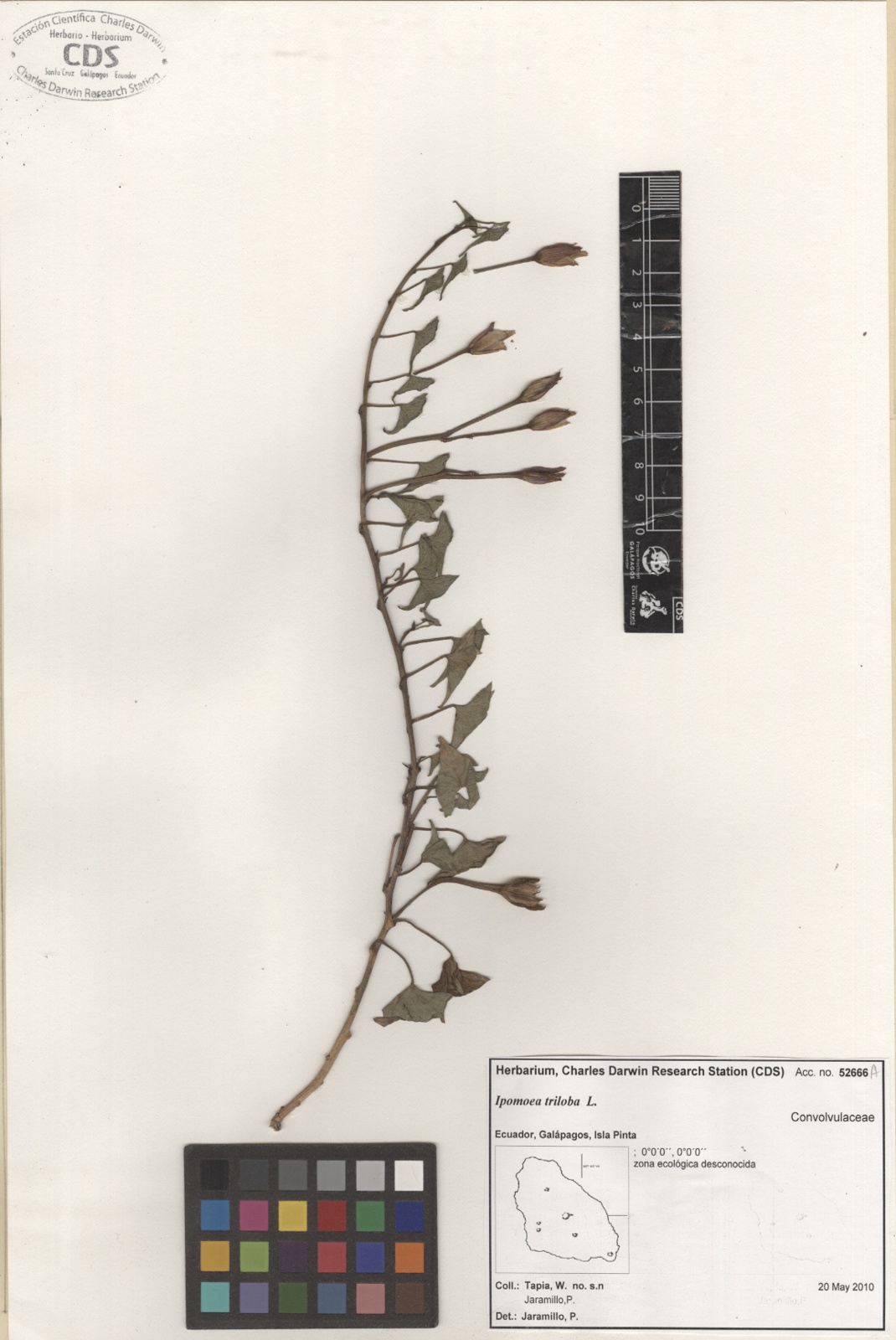
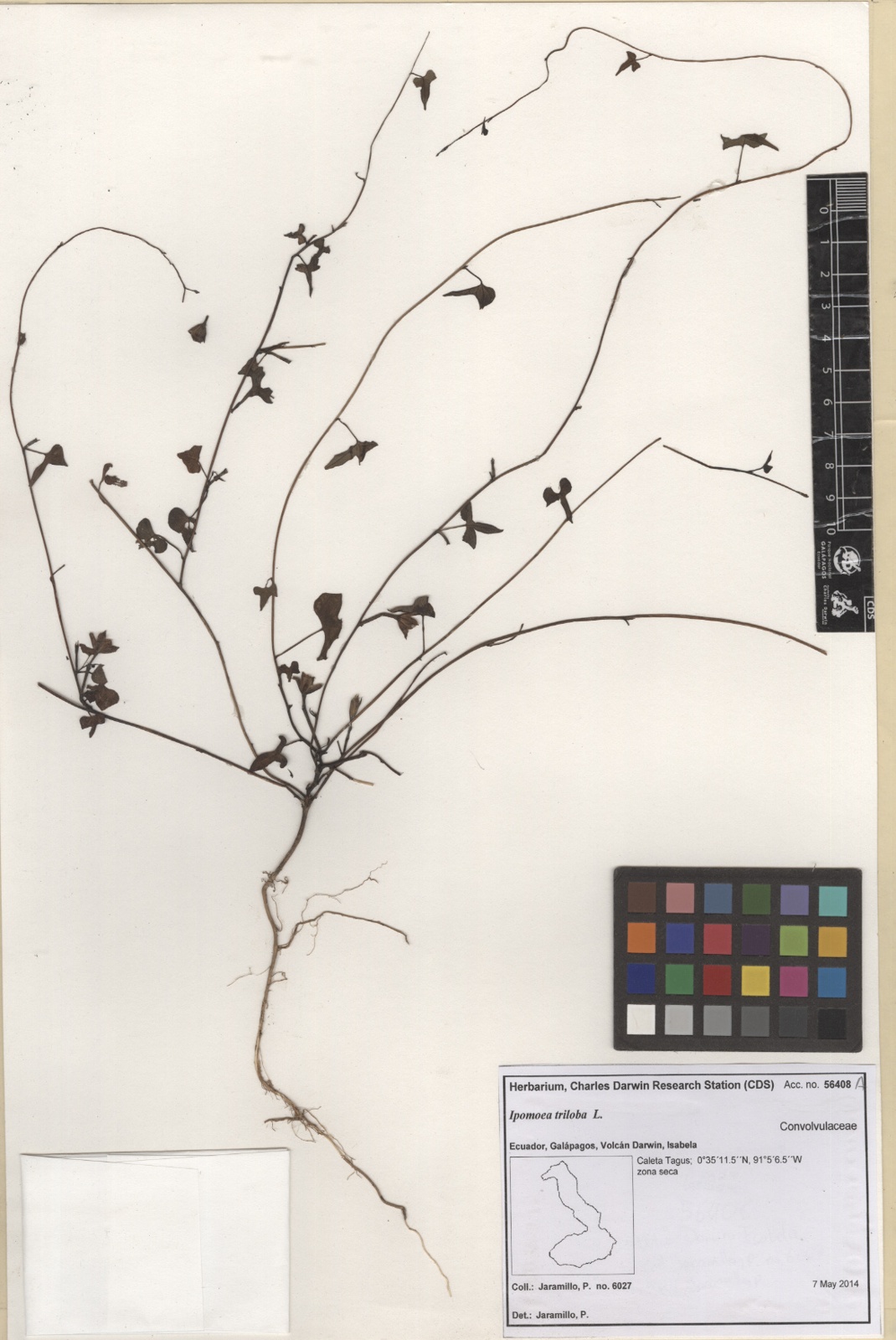
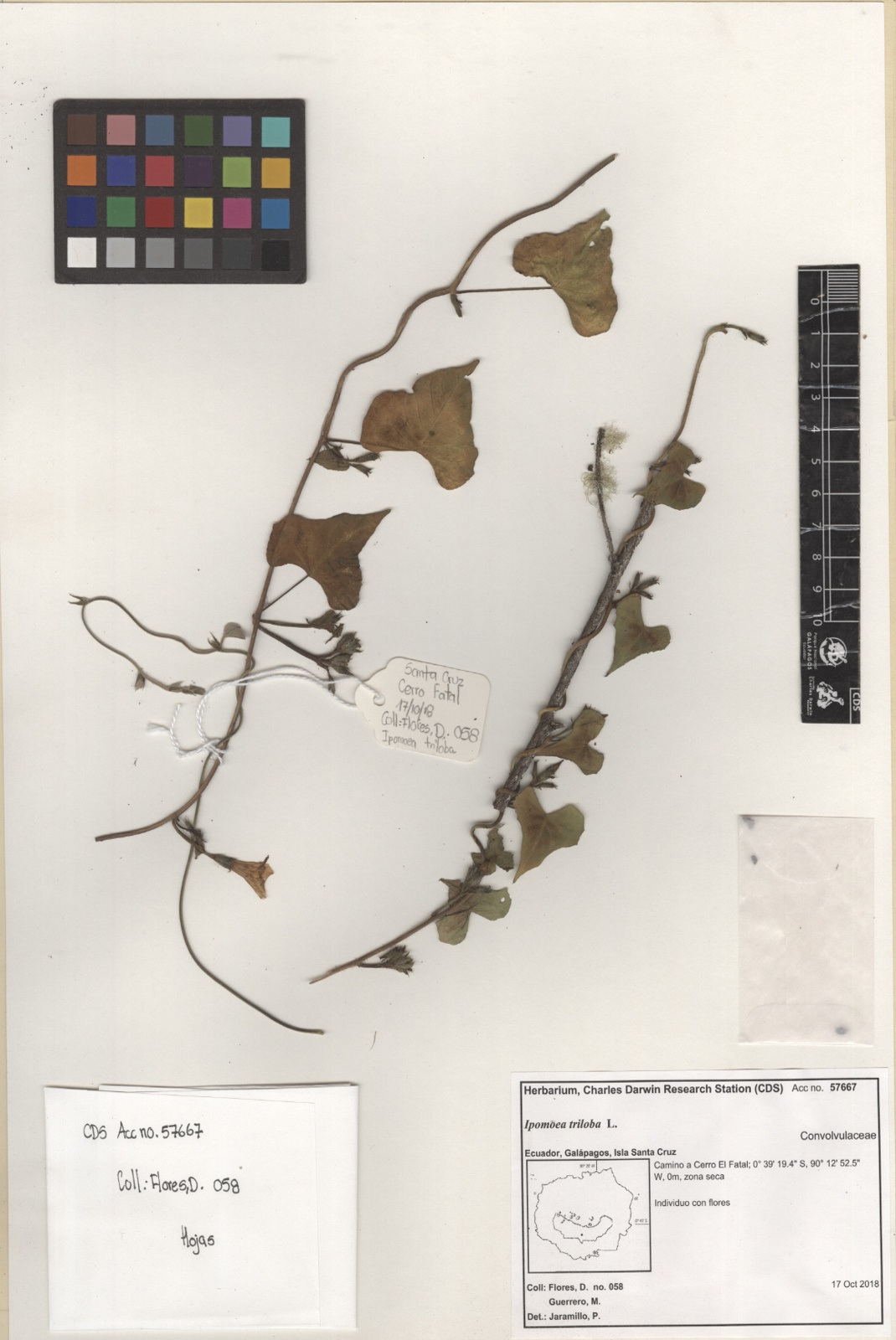
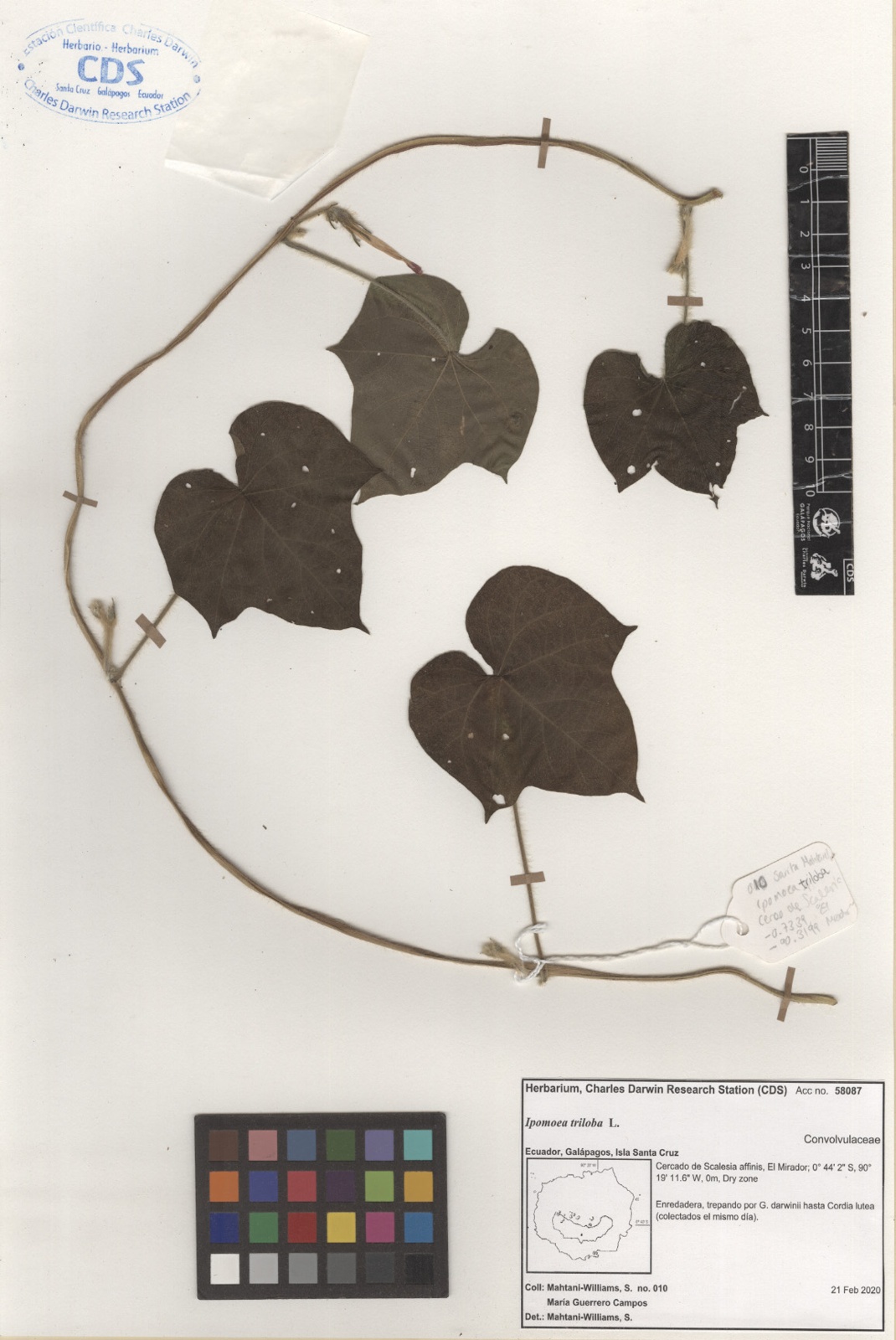
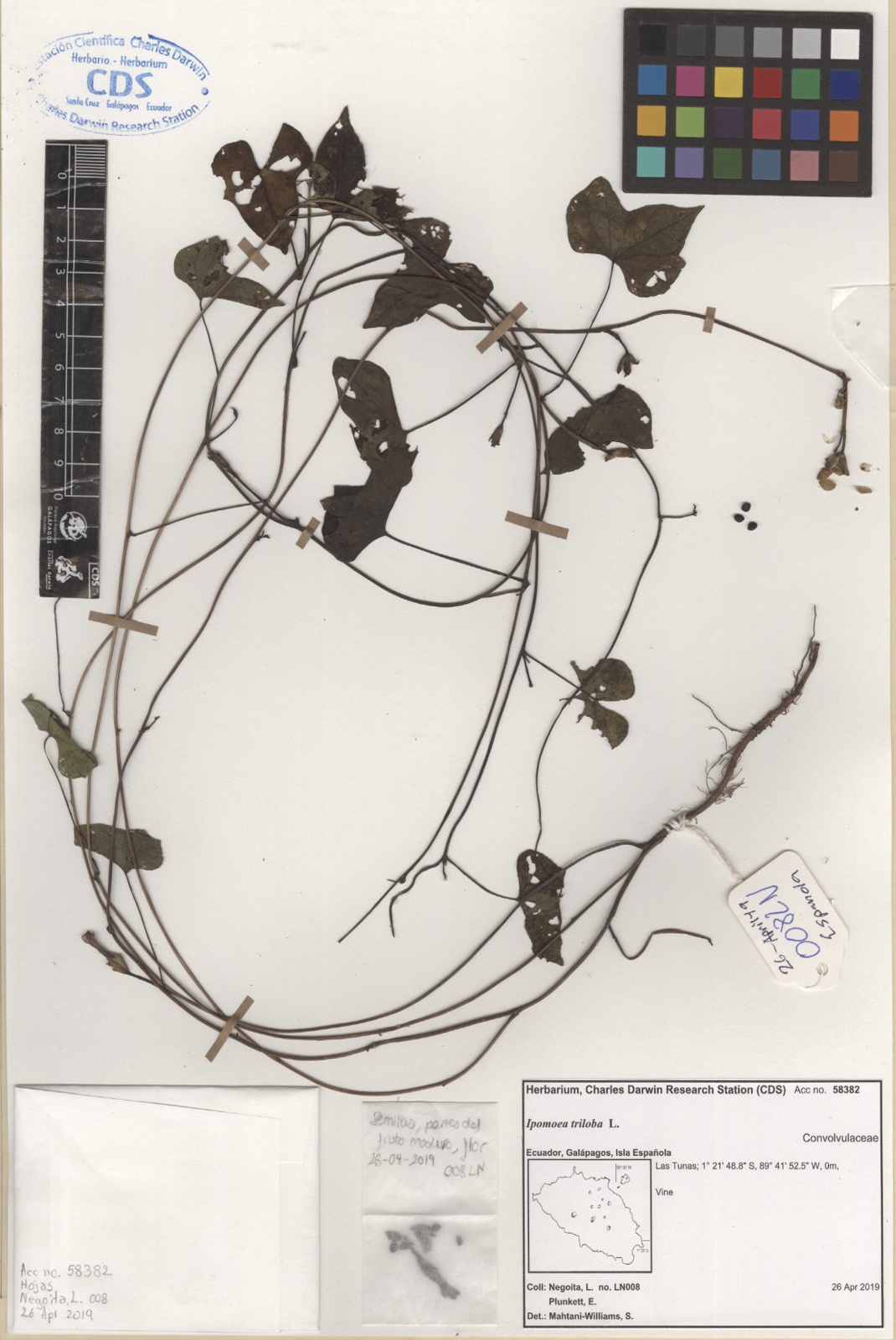
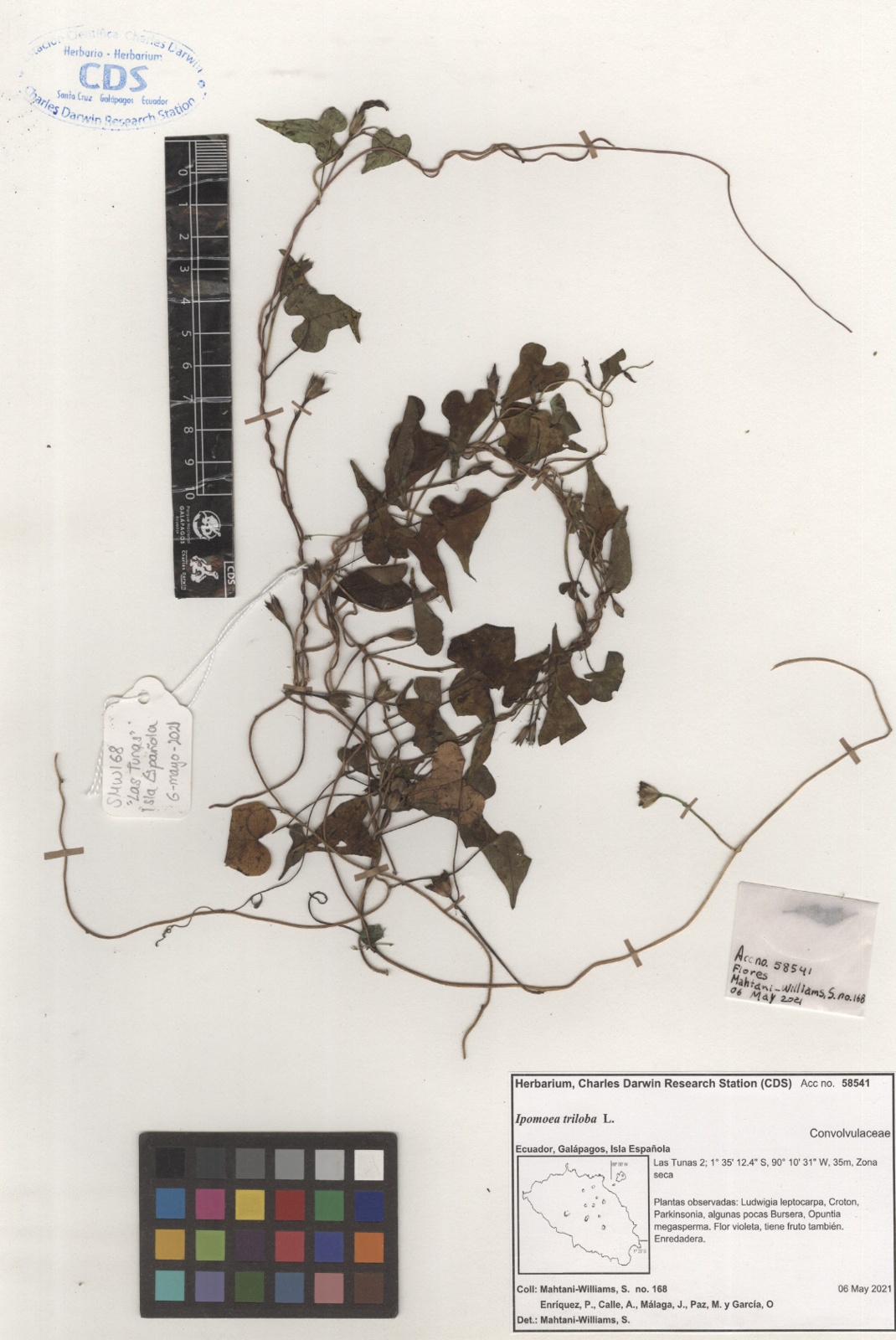
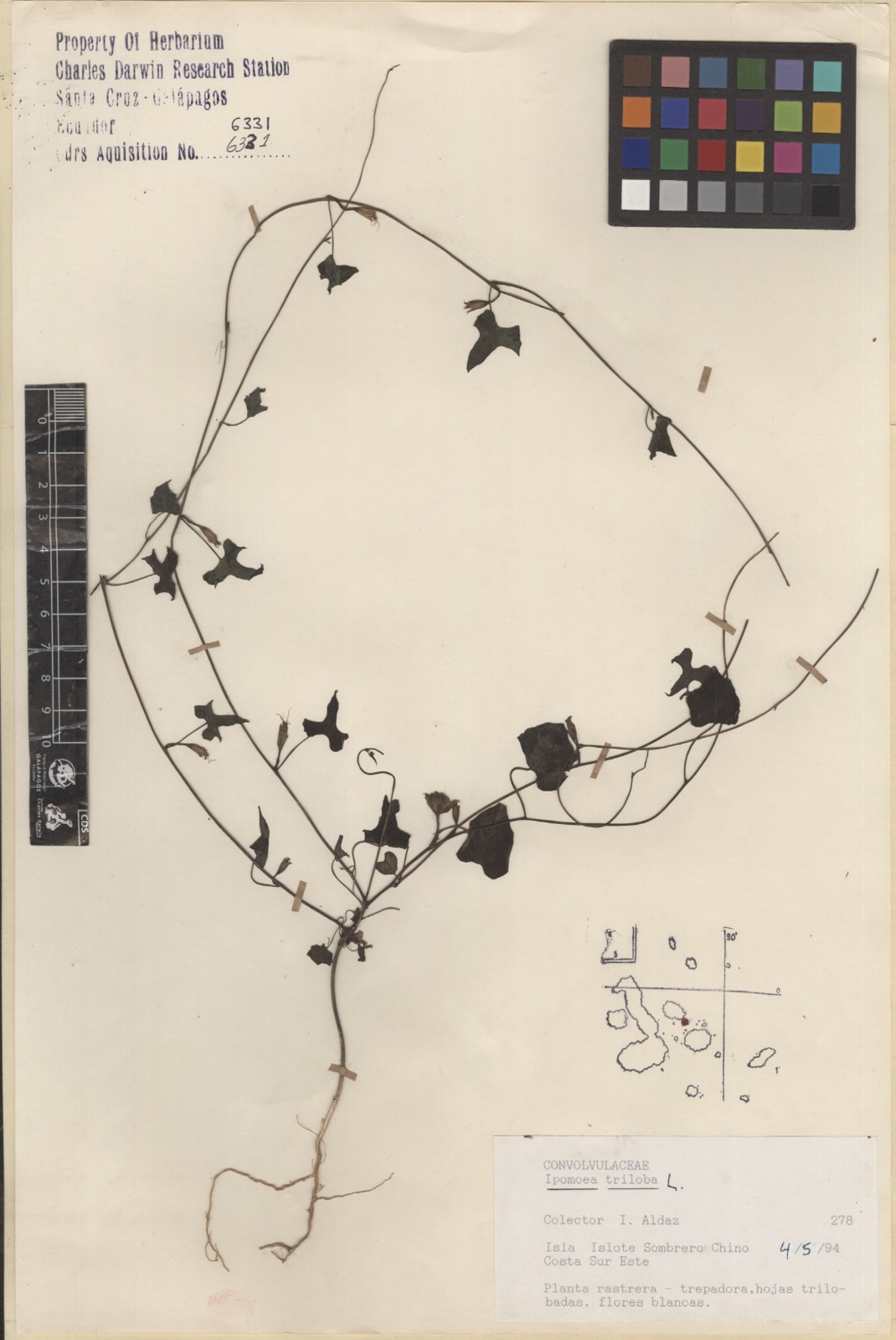
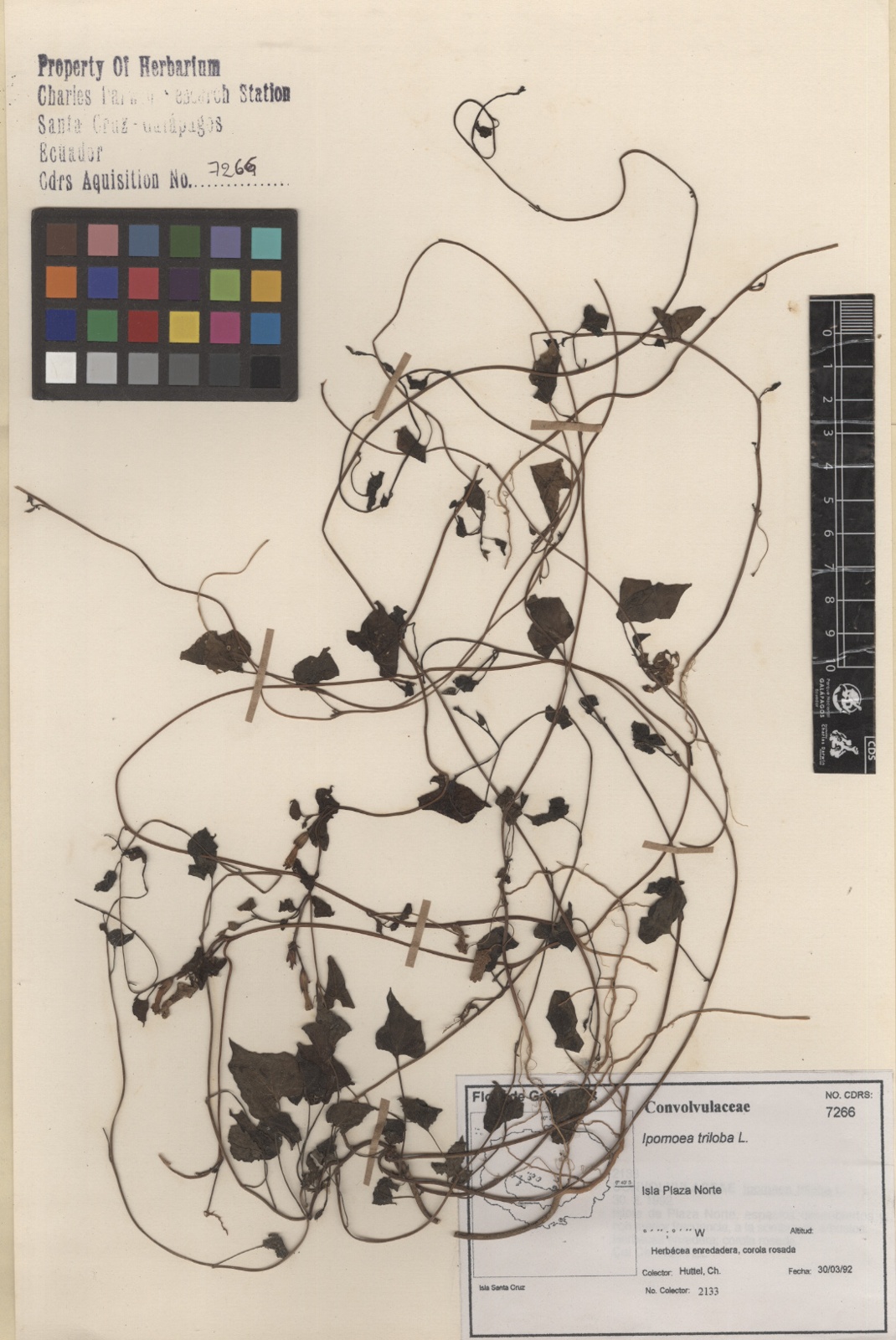
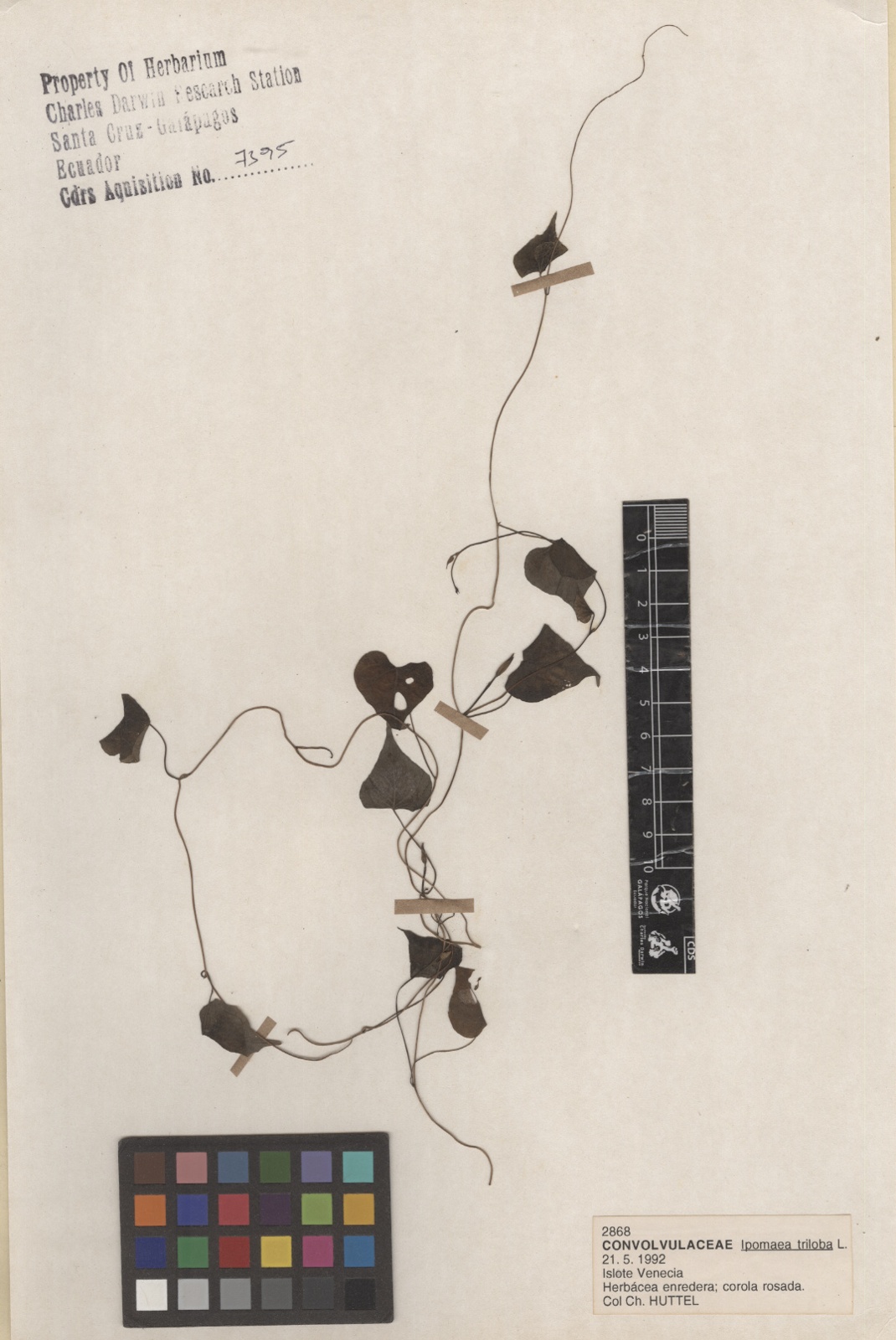
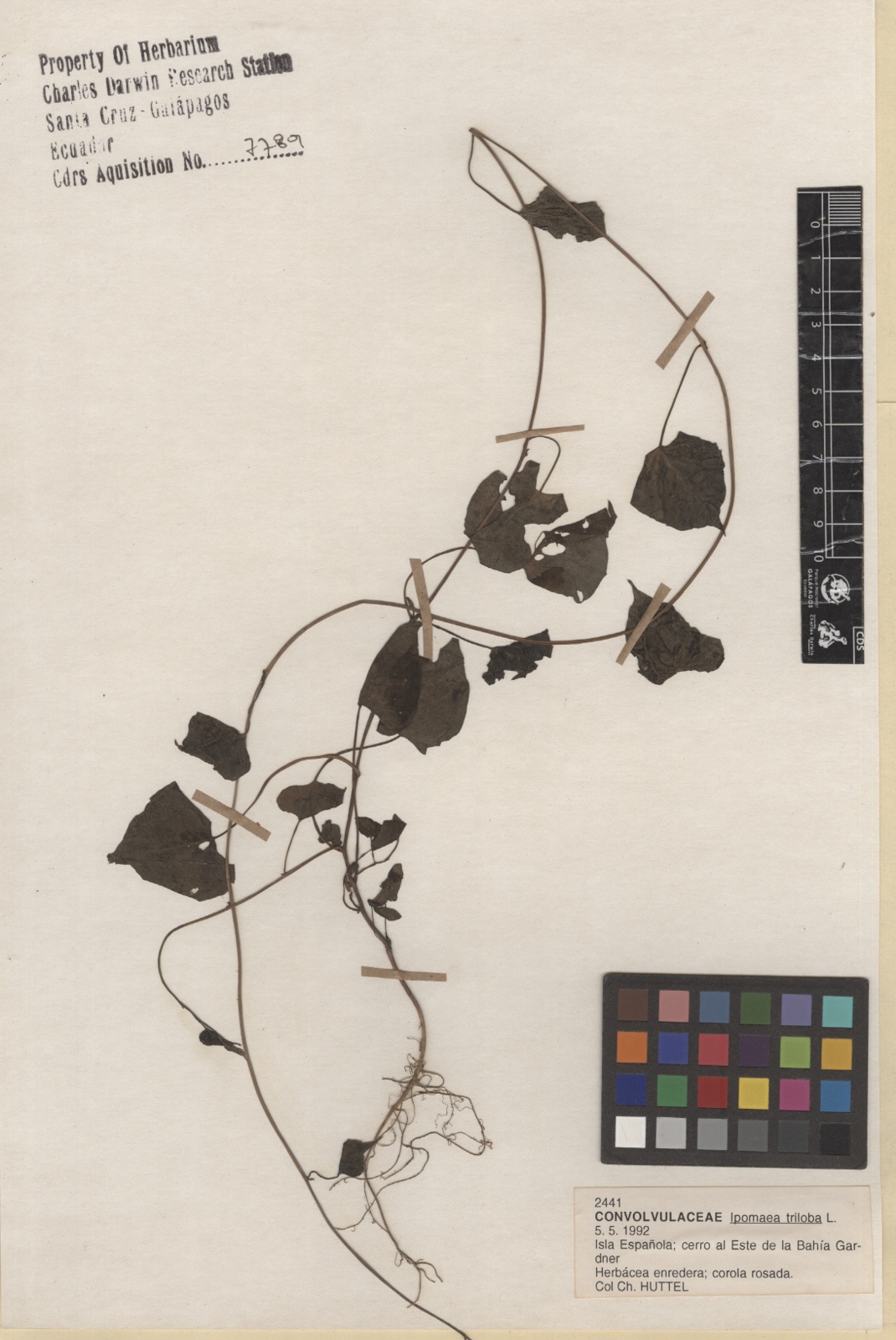
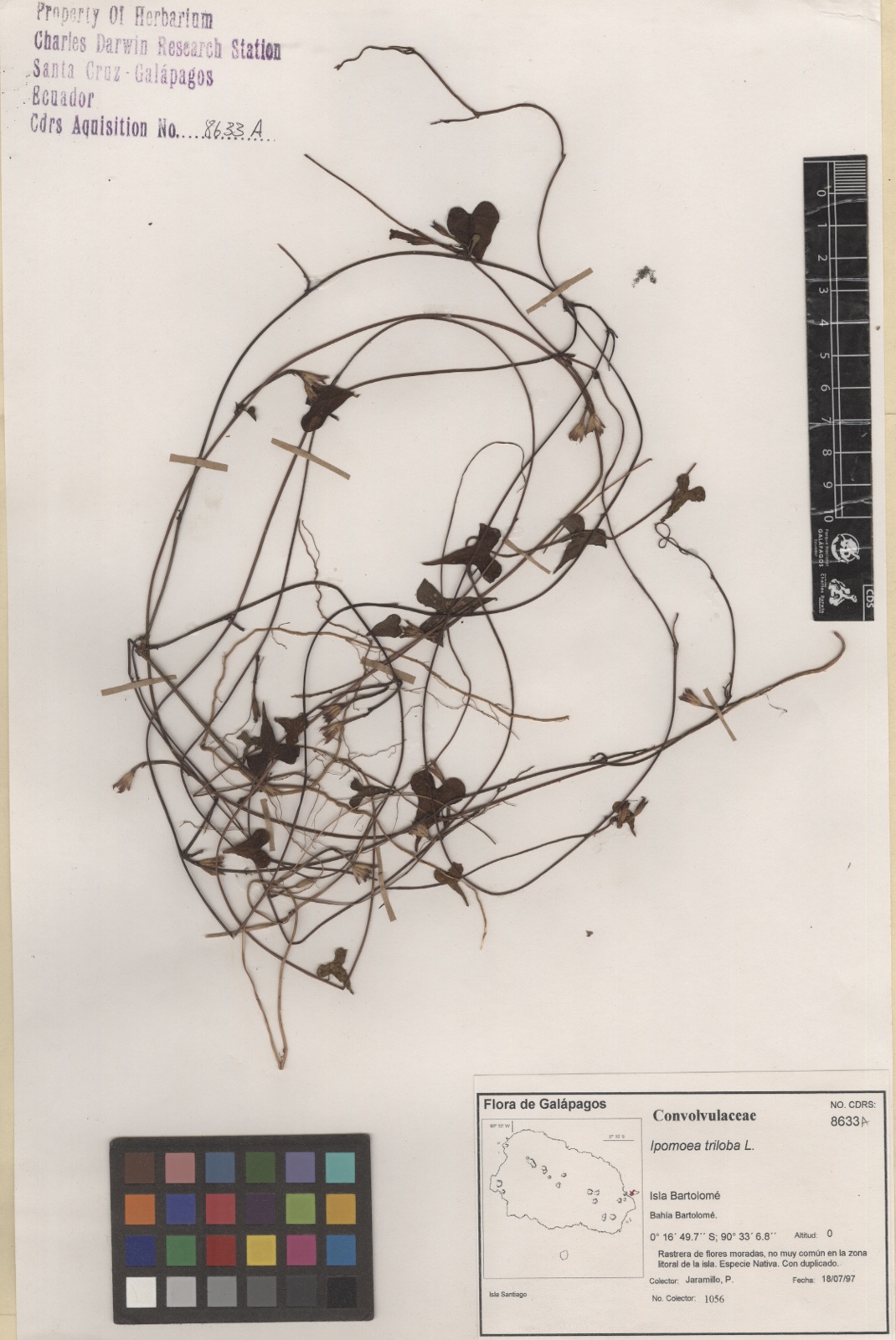
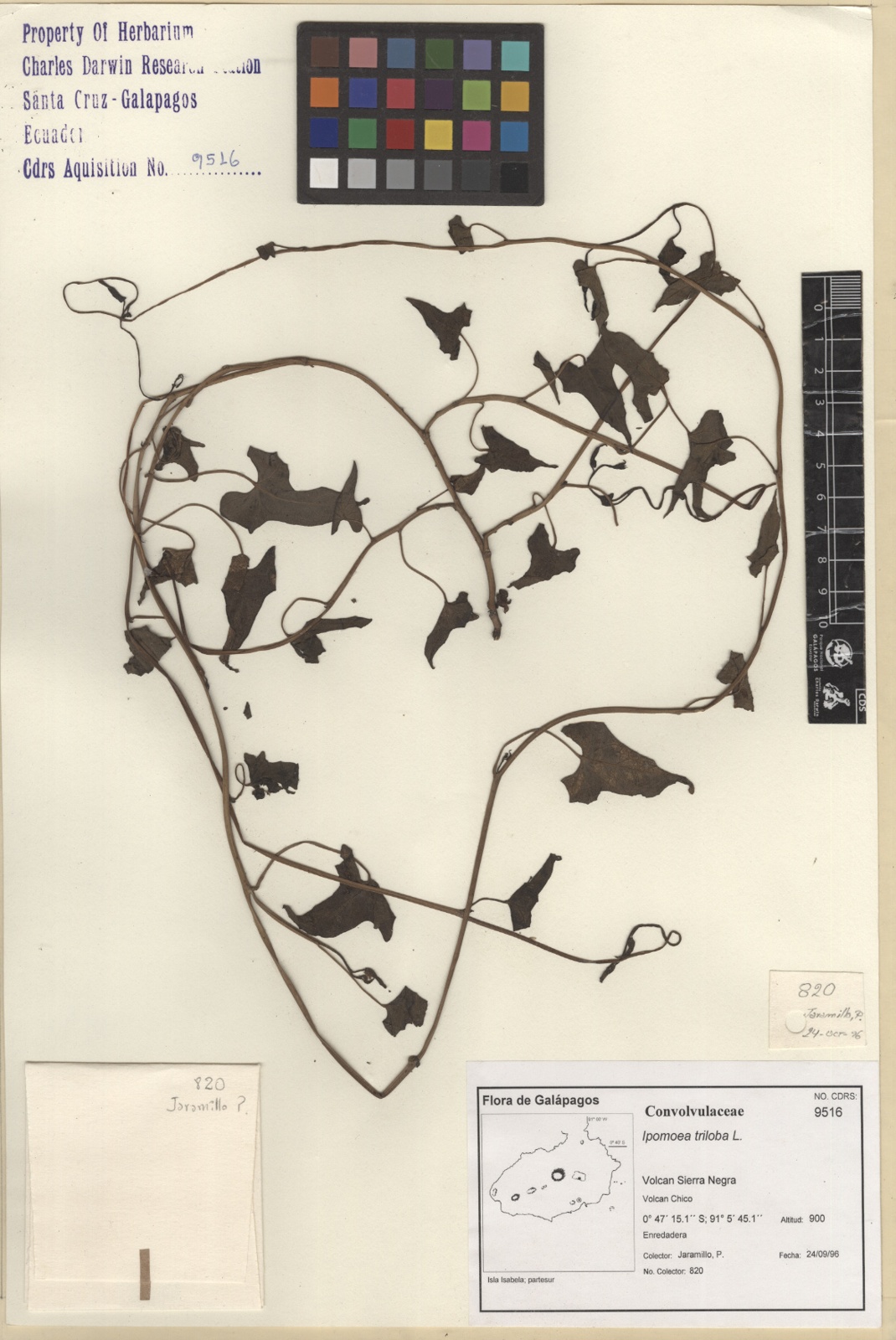
A delicate creeper with hairy stems and leaves in three lobes. The light pink flowers last only one day.
The flowers open at dawn.
Domain
Eukaryota
Kingdom
Plantae
Phylum
Magnoliophyta
Class
Magnoliopsida (= Dicotyledoneae)
Order
Solanales
Family
Convolvulaceae
Genus
Ipomoea
Species
triloba
Taxon category: Accepted
Syn.: Ipomoea galapagensis Andersson
Origin: Native
Map of specimen collection localities or observation records for this species in our collections database.
Distribution: The native range of this species is Mexico to Brazil, Caribbean, Galápagos (POWO, 2023).
- Abbott, I. Abbott, L.K. (1973) New distribution records of 65 plant species within the Galapagos Archipelago. Charles Darwin Research Station (CDRS), unpublished.
- Atkinson, R. Guézou, A. & Jaramillo, P. (2009) Siémbrame en tu jardín - Plantas nativas para jardines en Galápagos. Fundación Charles Darwin, Puerto Ayora, Galápagos, Ecuador, 151 pp.
- Austin, D.F. (1982) 165. Convolvulaceae. In: G. Harling & B. Sparre (Eds). Fl. Ecuador 15: 1–98.
- Blake, S. Wikelski, M., Cabrera, F., Guézou, A., Silva, M., Sadeghayobi, E., Yackulik, C. & Jaramillo, P. (2011) Gardeners of Galapagos? Seed dispersal by giant tortoises. Journal of Biogeography (submission): 1-41.
- Cayot, L. J. (1987) Ecology of Giant Tortoise (Geochelone elephantopus)in the Galápagos Islands. Submitted in partial fulfillment of the requirements for the degree of Doctor of Philosophy in Biology in the Graduate School of Syracuse University.
- Christophersen, E. (1932) A Collection of Plants from the Galápagos Islands. Nyt Mag. Naturvidenskaberne 70: 67-95.
- Fosberg, F. R. (1987) Vegetación inalterada en Fernandina, 1964 Memorias. Investigación Botánica y Manejo en Galápagos. Pg. 66-74
- Jäger, H. Tye, A., Kowarik, I. (2007) Tree invasion in naturally treeless environments: Impacts of quinine (Cinchona pubescens) trees on native vegetation in Galápagos Institute of Ecology, Department of Ecosystem Sciences and Plant Ecology, Technical University Berlin, Rothenburgstr. 12, 12165 Berlin, Germany.
- Jaramillo, P. (1998) Distribución Espacial de la Vegetación Vascular y Dispersión de Especies Introducidas dentro del Parque Nacional Galápagos. Tesis de Doctorado en Biología, Universidad Central del Ecuador. Especialización ECOLOGIA DE POBLACIONES.
- Lawesson, J.E. (s.a.) Pers. obs. field notes, collections 1985-7.
- McMullen, C.K. (1999) Flowering plants of the Galapagos. Cornell University Press, Ithaca and London, 370 pp.
- Royal Botanic Gardens, Kew (2022) Plants of the world online POWO (2022): Plants of the world online. Published on the Internet; Https://powo.science.kew.org/
- Schofield, E.K. (1984) Plants of the Galapagos Islands. Field Guide and Travel Journal. Universe Books, New York, 159 pp.
- Stewart, A. (1911) A botanical survey of the Galápagos Islands. Proc. Calif. Acad. Sci. 4th Series, 1: 7-288.
- Svenson, H.K. (1935) Plants of the Astor Expedition, 1930 (Galapagos and Cocos Islands). Am. J. Bot. 22: 208-277.
- Tropicos.org. (2017) Database of Missouri Botanical Garden. Tropicos.org. Missouri Botanical Garden. 06 Oct 2017 <http://www.tropicos.org
- Wiggins, I.L. Porter, D.M. (1971) Flora of the Galapagos Islands Standford University Press, Stanford.
You are welcome to download and use the information found in this page, acknowledging its source.
This page should be cited as follows:
"Galapagos Species Database, Ipomoea triloba", dataZone. Charles Darwin Foundation, https://datazone.darwinfoundation.org/en/checklist/?species=381. Accessed 30 October 2026.